

The Ossuary — Bones, Arrangements & Meaning
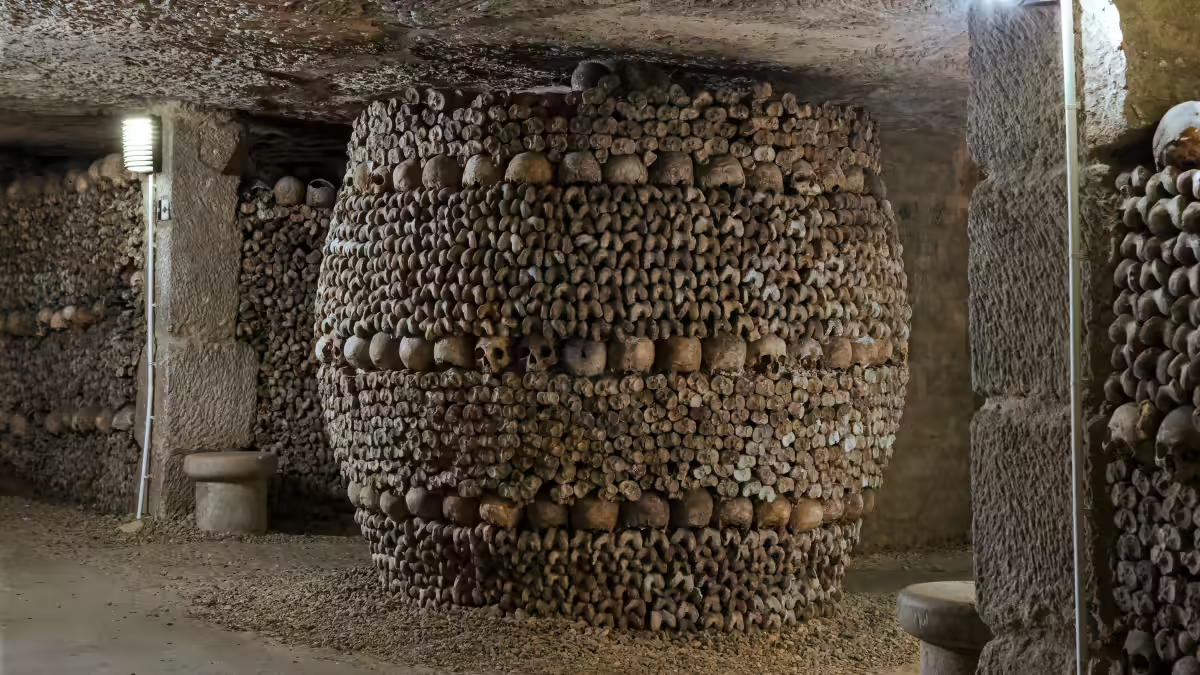
The ossuary is the section of the Paris Catacombs where the remains of around six million Parisians are arranged, mostly skulls and long bones, stacked into retaining walls that line the visitor route. Many sections are laid in deliberate patterns, including crosses and heart shapes, and carved plaques throughout carry inscriptions on mortality, such as “Arrête! C’est ici l’empire de la Mort” — “Stop! This is the empire of Death.” It is best approached as a memorial, not a curiosity.
Most people come to the Paris Catacombs for one thing: the ossuary itself, the tunnels lined floor to ceiling with the bones of people who once lived in the city above. It’s easy to focus on the scale of it, but the ossuary was built as a resting place, arranged with real care by the people who created it, and it’s worth understanding both the how and the why before you go.
This guide covers how the bones are arranged, where they came from, what the inscriptions say, and how to view the space respectfully. For the fuller story of how it came to exist, see our history of the Paris Catacombs.
How Many People Are Buried in the Ossuary?
The ossuary is estimated to hold the remains of around six million people, moved here from Paris’s overflowing cemeteries beginning in 1786. That figure is several times the population of Paris today, and it makes the ossuary one of the largest collections of human remains anywhere in the world. The bones are mixed and anonymous, with no individual burials or named graves.
That six million figure is necessarily an estimate rather than a precise headcount, since the bones arrived over decades from multiple cemeteries and were never catalogued person by person. What’s certain is the scale: this is not a handful of symbolic remains but the near-total contents of several of Paris’s oldest and largest burial grounds, moved underground because the city above had run out of room for its dead.
How Are the Bones Arranged?
The bones are stacked with skulls and long bones — mostly femurs and tibias — facing outward to form retaining walls along the tunnel route, with smaller bones packed behind them out of sight. In many sections the skulls are arranged into deliberate patterns, including crosses, and in places rows shaped into hearts. This arrangement dates mainly from 1809 onward, under the mining engineer Héricart de Thury, who organised what had been a disordered bone store into something visitors could walk through.
Before Héricart de Thury’s work, the bones had simply been tipped into the quarry from carts and left in heaps. His contribution was to have workers sort and stack them deliberately: skulls and long bones outward-facing in load-bearing walls, arranged in bands and patterns, with the smaller bones filling the space behind where they can’t be seen. The result reads less like a mass grave and more like a designed memorial, which was very much the intent — see our history of the Paris Catacombs for the fuller account of how that came about.
Which Cemeteries Did the Remains Come From?
The largest single contributor was the Saints-Innocents cemetery in central Paris, whose closure in 1780 after a fatal wall collapse set the whole transfer in motion. Saints-Innocents is thought to have supplied close to two million remains on its own. Many other parish cemeteries across Paris followed over subsequent decades as they too closed, along with remains from hospitals and morgues, adding up to the roughly six million total housed in the ossuary today.
The Inscriptions and Poems on Mortality
Carved stone plaques appear at intervals throughout the ossuary, most bearing lines in French reflecting on death and the shared fate of everyone who passes through. The best known reads “Arrête! C’est ici l’empire de la Mort” — “Stop! This is the empire of Death” — set above one of the entrances to the bone walls as a direct address to the visitor. Others quote poets and philosophers on mortality, chosen deliberately by Héricart de Thury to give the ossuary a reflective, almost sermon-like quality rather than treating it as a spectacle.
Sculptures and Features Within the Ossuary
Alongside the bone walls, the wider quarry galleries hold carved features that predate the ossuary itself, including the Port-Mahon sculptures made by a quarryman decades before any bones arrived. Our guide to the sculptures and artworks in the Catacombs covers these in full, alongside the carved doorways and inscriptions that appear alongside the bone walls proper.
Viewing the Ossuary Respectfully
The ossuary holds the remains of real people, and the site asks visitors to treat it accordingly: no touching or removing bones, no flash photography, and a level of quiet consideration appropriate to a place of burial rather than a novelty attraction. Our full guide to rules and etiquette covers what’s expected in detail, and the map and visitor route shows exactly where the ossuary sits within the wider underground walk.
Frequently Asked Questions
How many bodies are in the Paris Catacombs ossuary?
The ossuary is estimated to hold the remains of around six million people, moved here from Paris’s cemeteries from 1786 onward. It’s an estimate rather than an exact count, since the remains arrived in bulk over decades rather than being individually recorded, but the scale makes it one of the largest ossuaries in the world.
Why are the skulls arranged in patterns?
The mining engineer Héricart de Thury directed the arrangement from 1809, stacking skulls and long bones into deliberate bands and shapes, including crosses, rather than leaving them in disordered heaps. The intent was to turn a practical solution to a public health crisis into something visitors could approach with reflection rather than horror, and the patterns are part of that design.
What does “Arrête! C’est ici l’empire de la Mort” mean?
It translates as “Stop! This is the empire of Death” and appears carved above one of the entrances into the bone walls, addressing visitors directly as they pass in. It’s one of several inscriptions throughout the ossuary reflecting on mortality, chosen as part of Héricart de Thury’s arrangement to give the space a contemplative tone.
Which cemetery supplied the most remains to the ossuary?
Saints-Innocents, Paris’s oldest and largest parish cemetery, supplied close to two million remains after its 1780 closure. Many other Paris cemeteries contributed over the following decades as they too closed, bringing the ossuary’s total to around six million. See our history of the Paris Catacombs for the full timeline.
Can you touch or take a bone from the ossuary?
No. Touching or removing bones is strictly forbidden — it’s illegal, disrespectful and, in a working ossuary that is still a tomb, treated seriously by staff and security. Bag checks at the exit are partly there to prevent this. Our rules and etiquette guide covers this and other expectations in full.
Is photography allowed in the ossuary?
Yes, photography is generally permitted, but flash and tripods are not, partly to protect the fragile bones and stonework and partly out of respect for other visitors in an enclosed space. Keep phones and cameras discreet and be mindful that you’re photographing a tomb, not a museum exhibit.
Are the bones organised by person or cemetery?
No. The remains are mixed and anonymous, arranged for structural and visual effect rather than by individual identity or original burial place. There are no named graves within the ossuary — it functions as a collective memorial rather than a record of individuals, which is part of why the inscriptions address death in general terms rather than specific lives.
Where does the ossuary sit on the visitor route?
The ossuary occupies the central, deepest section of the official route, reached after a walk through unadorned quarry tunnels from the entrance. Our map and visitor route guide lays out exactly how the path runs from entry to exit, including how far into the visit the ossuary appears.
