

Paris Catacombs map & visitor route
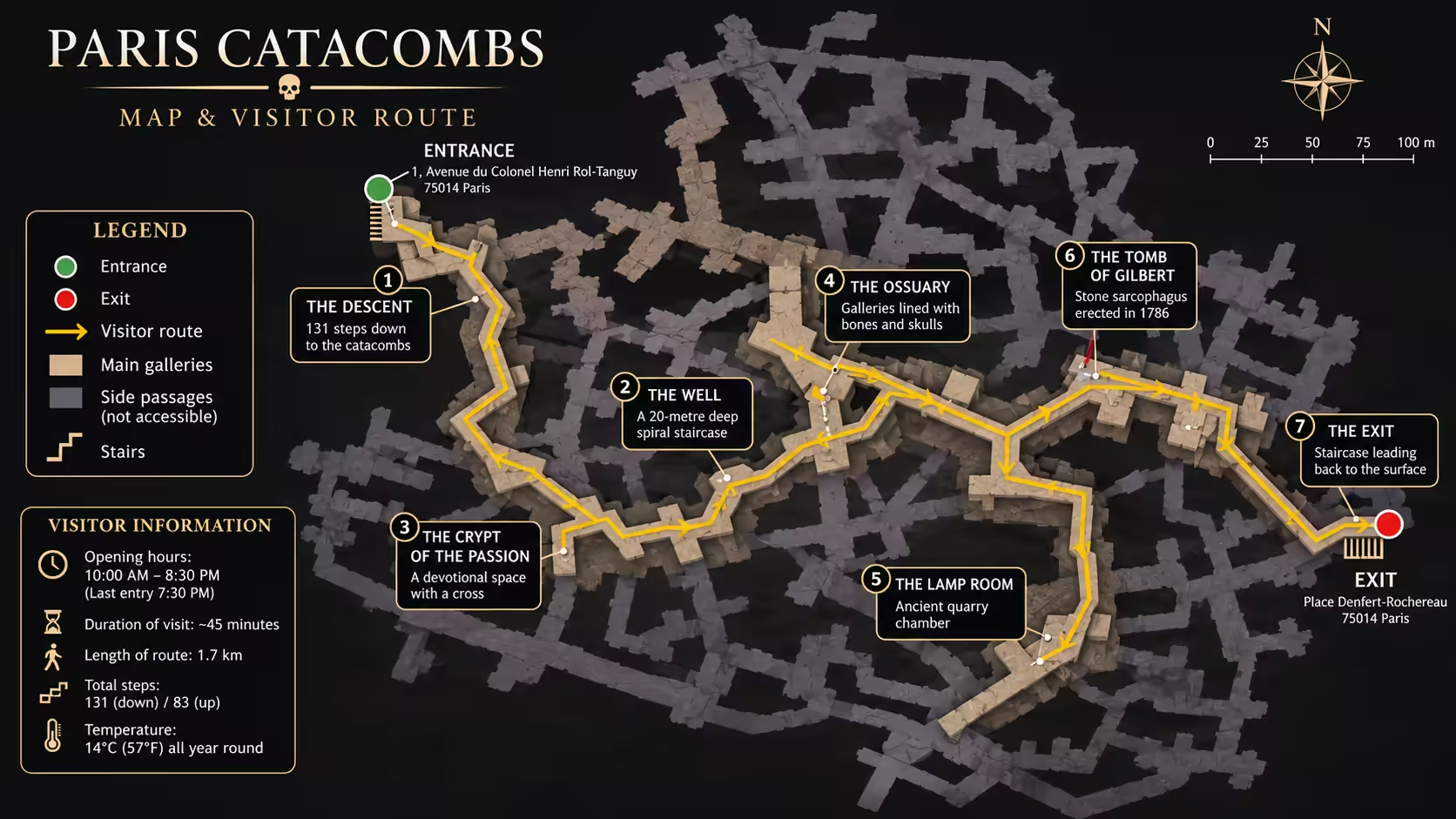
The Paris Catacombs follow a single one-way route: you enter at Denfert-Rochereau and descend a 131-step spiral staircase into former limestone quarries, walk roughly 1.5km through galleries and the ossuary, then climb 112 steps to a separate exit at 21bis Avenue René-Coty. There’s no map handed out and no way back — the 2026 renovation refreshed the route with new lighting and displays.
There’s no paper map at the Paris Catacombs, and you won’t miss one — the whole visit is a single path with no junctions and no way to double back once you’ve started. Knowing its shape before you go still helps, since where you go in, what you pass, and where you come out are quite different from what most first-time visitors picture.
This guide walks the route in order: the staircase at Denfert-Rochereau, the quarry galleries, the ossuary, and the separate exit, along with the landmarks worth slowing down for and what the 2026 renovation changed.
The Route at a Glance
| Stage | Detail |
|---|---|
| Entrance | 1 Avenue du Colonel Henri Rol-Tanguy, place Denfert-Rochereau |
| Descent | 131 steps, tight spiral staircase, no lift |
| Depth | About 20 metres — roughly a five-storey building |
| Underground route | About 1.5km, through galleries then the ossuary |
| Exit | 21bis Avenue René-Coty, 112 steps up |
| Visit time | About 45–60 minutes underground |
Starting Point: Denfert-Rochereau
The visit begins at 1 Avenue du Colonel Henri Rol-Tanguy, on place Denfert-Rochereau in the 14th arrondissement, right beside the Lion of Belfort statue. The nearest station is Denfert-Rochereau itself, served by métro lines 4 and 6 and RER B, about 50 metres from the door. If you’re coming from elsewhere in the city, our guide to how to get to the Paris Catacombs covers routes from every direction.
The 131-Step Descent
From the entrance pavilion, a tight spiral staircase of 131 steps takes you down about 20 metres — roughly the height of a five-storey building — into the former limestone quarries beneath Paris. There’s no lift, and the stairwell is narrow enough that you’ll descend single file. It’s the steepest, most physically demanding stretch of the entire visit.
The staircase sets the tone: cold stone walls curving tightly downward, the temperature dropping with every turn, the street noise fading out. By the bottom you’re in the quarry network that has run beneath the Left Bank since the Lutetian limestone here was first cut to build the city above.
Through the Quarry Galleries
Before you reach a single bone, you’ll walk a long stretch of raw quarry tunnels — rough-hewn corridors, low ceilings in places, and plaques recording the work of the Inspection Générale des Carrières, set up in 1777 to shore up these tunnels after street collapses above. This section makes up most of the 1.5km route, and it’s where the audio guide explains how a stone quarry became a cemetery.
Landmarks to Spot Along the Way
Two features stand out before you reach the ossuary: the Port-Mahon sculptures, a detailed model of a Menorcan fortress carved directly into the quarry stone by a former quarryman, and the Fontaine de la Samaritaine, a small underground well. Shortly after, a stone doorway inscribed “Arrête, c’est ici l’empire de la Mort” (“Stop, this is the empire of Death”) marks the formal threshold into the ossuary itself.
The Port-Mahon sculptures are carved by Décure, a quarryman and veteran of Louis XV’s armies, who recreated the fortress from memory in the rock around him. A little further on, the Samaritaine fountain is a modest well that once supplied the quarrymen who worked this stretch of tunnel. The inscribed doorway just beyond it marks the moment the visit changes register — from industrial quarry to memorial.
The Ossuary
Past the doorway, the corridors change completely: walls built from neatly stacked skulls and femurs, arranged into patterns and crosses from 1809 under Louis-Étienne Héricart de Thury, who organised the site for visits. This is where the remains of around six million Parisians rest, moved here from the city’s overflowing cemeteries from 1786 onwards. Our guide to the ossuary covers each section in detail — how the bones are arranged, what the inscriptions mean, and why this particular design was chosen.
The Separate Exit: 112 Steps Up
You do not exit where you entered. The Paris Catacombs exit is at 21bis Avenue René-Coty, roughly a ten-minute walk from the entrance at street level, reached by climbing 112 steps up from the tunnels. There’s a bag check on the way out, and from there it’s a short walk back to Denfert-Rochereau if that’s where your day continues.
This catches a fair few visitors out — after an hour underground, you emerge somewhere you didn’t start. Staff at the exit check bags briefly before you step back onto the street.
The New 2026 Route
The Catacombs reopened on 8 April 2026 after a major renovation, and while the underground path follows the same basic shape, the experience along it changed considerably. Concrete flooring now replaces the old earthen surface in parts of the bone galleries, giving surer footing. New lighting picks out details in the walls that were easy to miss before, while keeping the site’s subdued, atmospheric feel intact. A new audio guide, narrated in the voice of Héricart de Thury across roughly twenty chapters that trigger automatically as you walk, replaces the old handset-and-number system, and fresh exhibition displays and short films sit along the galleries. Our 2026 renovation guide covers every change.
No Re-Entry, No Shortcuts
Because the route is single-file and one-way, there’s no going back for a second look and no way to skip ahead. Staff are positioned along the route if you need to leave partway through, but for a normal visit, plan on completing the full 1.5km and both staircases — there’s no shortcut back to the entrance once you’re past the first turn.
Frequently Asked Questions
Is there a printed map of the Paris Catacombs?
No. The visit is a single one-way path with no junctions, so a map isn’t handed out or needed. The audio guide narrates the route as you walk, and staff are positioned at intervals if you have questions. There’s genuinely only one way to go from the entrance to the exit.
How many steps are there in total?
There are 243 steps across the full visit: 131 down at the start and 112 up at the end, with no lift at either point. The descent is a tight spiral staircase, while the exit climb is more open. Anyone with mobility, breathing or heart conditions should treat both flights as a serious consideration.
How long is the underground route?
The route runs about 1.5km from the bottom of the entrance staircase to the foot of the exit stairs, taking in the galleries and the ossuary. Most visitors complete the whole walk, including time in the ossuary, in around 45 minutes to an hour.
Do you exit where you entered?
No. Entry is at 1 Avenue du Colonel Henri Rol-Tanguy on place Denfert-Rochereau, while the exit is separate, at 21bis Avenue René-Coty. The two are roughly a ten-minute walk apart at street level. See our guide to how to get to the Paris Catacombs if you’re planning transport either side of your visit.
What does “Arrête, c’est ici l’empire de la Mort” mean?
It’s a carved stone inscription reading “Stop, this is the empire of Death” in French, set into a doorway near the Port-Mahon sculptures. It marks the formal entrance into the ossuary proper, after the long stretch of quarry tunnels. It’s one of the most photographed spots on the route and a good moment to pause before the bone galleries begin.
Can I skip part of the route or take a shortcut?
No. The Catacombs are single-file and one-way throughout, so there’s no way to bypass sections or double back for another look. Staff along the route can assist if you need to stop, but there’s no side exit partway through. This is worth knowing if you or someone in your group finds enclosed spaces difficult — see is the Catacombs scary for how to prepare.
What are the Port-Mahon sculptures?
A detailed carved model of the fortress of Port-Mahon in Menorca, cut directly into the quarry stone by Décure, a former quarryman and veteran of Louis XV’s armies. They sit in the galleries before the ossuary and are among the only sculpted, rather than architectural, features on the route. Full detail is in our guide to sculptures and artworks.
Did the route change after the 2026 renovation?
The overall shape — staircase down, galleries, ossuary, separate exit — is unchanged, but the experience was refreshed. New lighting, concrete flooring in parts of the bone galleries, an automatically-triggered audio guide and fresh exhibition displays all date from the reopening on 8 April 2026. Our renovation guide has the full list.
