

Paris Catacombs Rules & Visitor Etiquette
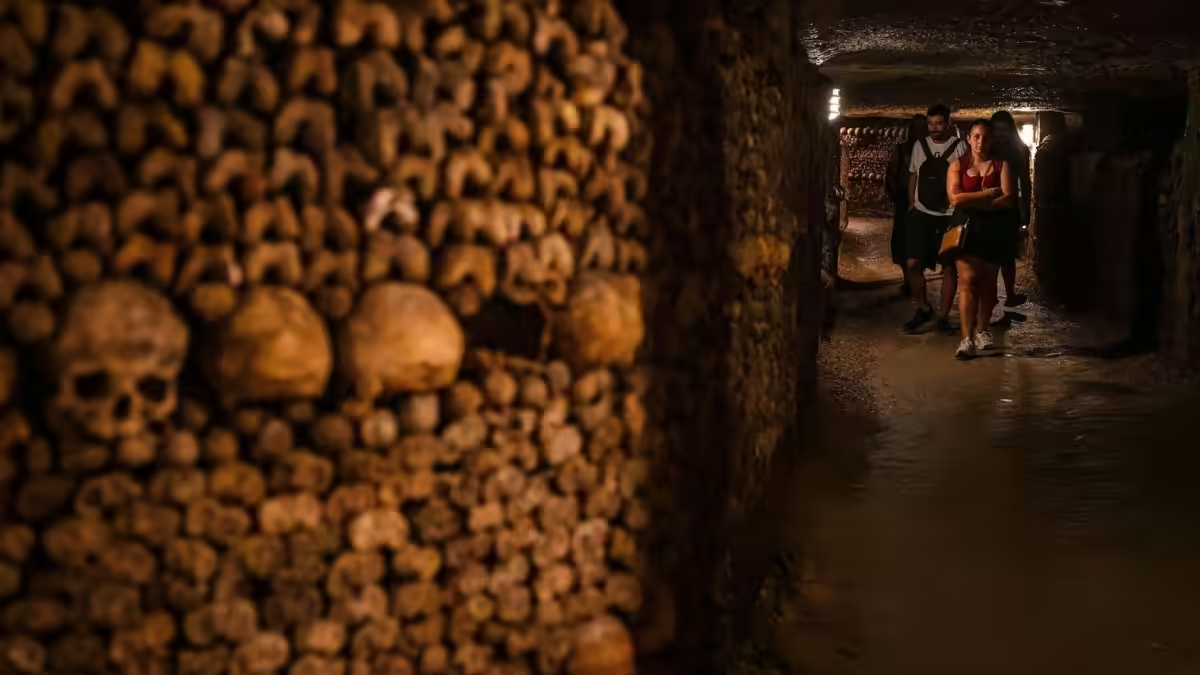
The Paris Catacombs are a tomb holding the remains of around six million Parisians, so the core rules are simple: do not touch or take bones, keep noise to a respectful level, and stay on the marked route. Photography is allowed without flash or tripods, large bags and luggage are not permitted, and there’s no food or drink underground. Entry is by timed ticket, with numbers capped underground at any one time.
Before you head down the 131 steps into the ossuary, it helps to know what’s expected of you once you’re there. This isn’t a theme park attraction — it’s an active burial site, and the site’s rules exist to protect both the remains and the fragile limestone galleries around them.
This guide sets out the practical rules for visiting the Paris Catacombs: how to behave around the bones, what you can and can’t bring, the photography policy, and how the timed-entry system controls numbers underground.
It Is a Tomb, Not an Attraction
The Paris Catacombs hold the remains of roughly six million Parisians, moved here from the city’s overflowing cemeteries from 1786 and arranged into walls and patterns from 1809. Visitors are asked to keep voices down, avoid running or rowdy behaviour, and remember that every skull and femur on display was once a person. Treating the space with the same quiet respect you’d bring to a cemetery is the basic expectation throughout the visit.
The scale can make it easy to forget what you’re looking at, but each wall of bones represents individual Parisians whose graves were cleared to make way for the modern city above. Staff and audio guide commentary both frame the site this way, and it shapes how most visitors naturally behave once they’re inside. If you’re planning to bring children, our guide to visiting the Paris Catacombs with kids covers how to prepare them for the atmosphere.
Don’t Touch or Take Bones
Touching, moving or removing bones from the ossuary is strictly forbidden and is treated as theft and desecration, not a minor infraction. Bag checks happen at both the entrance and, more thoroughly, at the exit, specifically to deter souvenir-taking — a practice that has been a persistent problem historically. Beyond the legal and ethical issue, the bones are load-bearing parts of walls that are centuries old and increasingly fragile, so even casual touching can cause damage.
Photography Rules
Photography is generally permitted throughout the Paris Catacombs, including in the ossuary, but flash photography and tripods are not allowed. Flash can degrade the fragile bones and carved stone over time, and tripods slow down the flow of visitors through narrow single-file passages. Handheld photos and phone cameras are fine; just be prepared for low light and expect other visitors to be moving through the same narrow galleries as you.
Low-light photography without flash is part of the experience — many visitors find it adds to the atmosphere rather than detracting from it. If you want sharper shots, raise the ISO or use a fast lens rather than reaching for flash, and be ready to step aside quickly in the tighter passages so the queue keeps moving.
What You Can’t Bring
Large bags and luggage are not permitted inside the Catacombs, and there is no left-luggage facility at the site, so plan accordingly if you’re travelling with suitcases or large backpacks that day. Food and drink are not allowed anywhere on the route, including the ossuary and the connecting tunnels. A small bag, a jacket for the constant 14°C, and a bottle of water to finish once you’re back at street level are the practical essentials — our guide to what to wear and bring covers this in more detail.
Stay on the Marked Route
The visitor route runs about 1.5km through former limestone quarries, and it is fixed — there’s no wandering off into side tunnels or the wider quarry network beyond the official path. This isn’t just etiquette; the unofficial quarries beyond the Catacombs’ boundaries are unstable in places and illegal to enter without authorisation. Staying on the marked route keeps you safe and keeps the fragile galleries intact for future visitors.
Timed Entry and the Visitor Cap
The Paris Catacombs cap the number of visitors underground at any one time, so entry is by timed ticket bought online in advance rather than a queue on the day. This controls crowding in the narrow tunnels and protects air quality and the site itself. Arriving on time for your slot matters, since late arrivals can lose their booking and walk-up availability is very limited.
The cap exists partly for comfort and partly for conservation — fewer people underground means less humidity and less wear on the centuries-old stonework. It also means the atmosphere stays calmer than you might expect for one of Paris’s most-visited sites, since you’re never sharing the ossuary with a crowd far larger than it can comfortably hold.
Frequently Asked Questions
Can I touch the bones in the Paris Catacombs?
No. Touching, moving or taking bones is forbidden and treated as theft and desecration of a burial site. Bag checks at the entrance and exit are partly there to prevent removal of remains. The bones also form structural parts of the wall arrangements, so even light touching can damage displays that have stood since 1809.
Is photography allowed in the Catacombs?
Yes, handheld photography without flash is allowed throughout, including in the ossuary. Flash photography and tripods are both banned — flash to protect the fragile remains and stonework, tripods because they block the narrow single-file passages. Bring a fast lens or raise your camera’s ISO rather than relying on flash for low-light shots.
Can I bring a backpack or suitcase?
Large bags and luggage aren’t permitted, and there’s no left-luggage facility at the site. A small daypack is fine and will be checked at the entrance. If you’re travelling with luggage that day, leave it at your hotel or a nearby locker before heading to place Denfert-Rochereau.
Is food or drink allowed underground?
No. Food and drink aren’t permitted anywhere on the 1.5km route, including the ossuary. The visit takes about an hour, so most visitors manage without difficulty, though it’s sensible to eat beforehand — see our guide to restaurants and cafés near the Catacombs for options.
Why is there a visitor cap underground?
The Catacombs limit numbers underground at any one time to manage crowding in the narrow tunnels, protect air quality, and reduce wear on the fragile 18th-century stonework. This is why tickets are timed and sold online only, rather than available as walk-up entry. It also keeps the visit calmer than the site’s overall popularity might suggest.
Do I need to stay on a set path?
Yes. The route is fixed for the full 1.5km, with no access to side tunnels or the wider quarry network. This protects both visitors and the site, since unofficial sections beyond the marked path can be structurally unstable and are illegal to enter without permission.
Is the Catacombs experience scary or unsettling?
It can feel intense for some visitors, given the low light, cool temperature and sheer volume of human remains, though it isn’t designed as a horror experience. Our guide on whether the Catacombs are scary breaks down what to expect so you can judge if it suits you or anyone you’re bringing.
What happens if I break the rules?
Staff monitor the route and can ask visitors to leave for touching bones, using flash, or disruptive behaviour. Removing remains is a criminal matter, not just a site infraction. Most visitors never encounter an issue, since the rules are straightforward and the atmosphere generally encourages quiet, respectful behaviour without much need for enforcement.
