

History of the Paris Catacombs
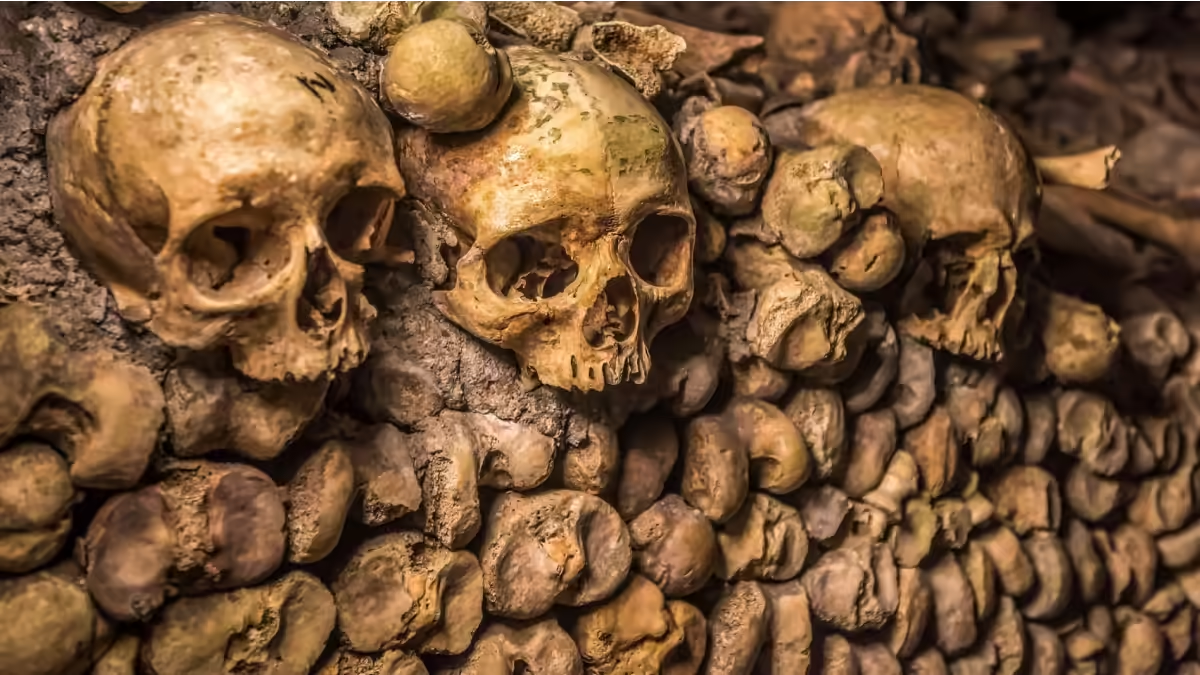
The Paris Catacombs began as limestone quarries worked from Roman and medieval times to build the city above. From 1786, as Paris’s cemeteries overflowed and became a public health hazard, the city moved millions of bones into the disused galleries, starting with the Saints-Innocents cemetery. The site was consecrated that year, and from 1809 the mining engineer Héricart de Thury arranged the remains into the walls and patterns visitors see today.
The Paris Catacombs are, in truth, two histories layered on top of one another: a quarry and an ossuary. Long before anyone thought to move a single bone underground, generations of quarrymen were cutting the limestone that built the city above. It was only centuries later, when Paris ran out of room for its dead, that the empty galleries found a second purpose.
This guide traces that story in order — from the Roman-era quarries, through the 18th-century cemetery crisis that forced the city’s hand, to the night-time transfers of 1786 and the ossuary’s formal arrangement under Héricart de Thury, and on to the site’s use during the Second World War. For what the space looks like today, see our guides to the ossuary and the underground quarries more broadly.
Roman and Medieval Quarries Beneath Paris
Paris sits on a thick seam of Lutetian limestone, and the Left Bank in particular was quarried for it from Roman times onward and through the Middle Ages, as the stone was cut to build the city’s churches, walls and townhouses. Quarrymen worked by digging shafts down to the stone and then tunnelling outward horizontally, following the seam until it was exhausted, then moving on and leaving the worked-out galleries behind. Over many centuries this left a honeycomb of abandoned tunnels beneath what became the 14th arrondissement and neighbouring districts, largely unmapped and, by the 18th century, unstable enough that streets above began to collapse into them. For the fuller picture of how far this network reaches, see our guide to the underground quarries.
Why Were Bones Moved Into the Quarries?
Paris moved its dead underground because its parish cemeteries, above all Saints-Innocents in the centre, had been in continuous use for nearly a thousand years and were dangerously overfull. By the late 18th century the ground had risen metres above street level, and in 1780 a cellar wall next to the cemetery gave way under the weight of remains. That collapse forced its closure and pushed authorities toward a solution: the empty quarries beneath Montrouge.
The scale of the problem is easy to understate. Saints-Innocents alone is thought to have held the remains of close to two million people by the time it closed, built up through burials, plague years and the output of nearby hospitals and morgues. Parisians living nearby had long complained of the smell and of cellars flooding with matter seeping from the burial ground. The 1780 wall collapse was the final trigger: within a few years, the city had passed the legal groundwork to empty the cemetery into the quarries instead.
The Nightly Transfer of the Bones (1786–1788)
The transfer itself began on 7 April 1786 and was carried out with a mixture of practicality and ceremony. Wagons covered in black cloth carried the bones from Saints-Innocents and, in time, from other closing parish cemeteries, moving mostly at night to limit the disruption and the discomfort the sight caused Parisians and the Church alike. Priests accompanied the convoys and chanted the service for the dead as the wagons made their way to a shaft near what is now place Denfert-Rochereau, where the remains were tipped down into the quarry galleries below.
The main transfer from Saints-Innocents took roughly two years to complete, and further remains from other Paris cemeteries continued to be added into the early 1800s, with another significant wave during the Haussmann-era redevelopment of Paris in the 1860s. In total, the ossuary is estimated to hold the remains of around six million people — several times the population of Paris today.
Consecration and the Name “Catacombs”
The site received a formal benediction and consecration in 1786, becoming the Paris Municipal Ossuary in the eyes of the church and the city. The name “Catacombs” followed soon after, borrowed from the ancient Roman catacombs, even though the Paris site is a quarry ossuary rather than a burial network in the Roman sense. For years afterwards the space remained a working store of bones rather than something built for visitors — that transformation came a little later, under one man in particular.
Héricart de Thury and the 1809 Ossuary
From 1809, visits by appointment were first permitted, and the mining engineer Louis-Étienne Héricart de Thury, who led the Inspection Générale des Carrières from 1810, took on the task of turning a disorganised bone store into something that could be shown to the public. He directed the stacking of skulls and long bones into the retaining walls that still line the route, arranged in places into deliberate patterns, and added carved plaques, inscriptions and small architectural features to give the ossuary a sense of order and reflection rather than horror. Some of the artistry down here predates his work entirely: the Port-Mahon sculptures were carved by a quarryman decades earlier, while the space was still an active quarry rather than an ossuary. For a fuller look at how the bones themselves are arranged and what the inscriptions mean, see our guide to the ossuary.
Expansion and 20th-Century Use
Through the 19th century the ossuary’s boundaries and access points were refined as Paris kept growing and more burial grounds closed, but the core arrangement Héricart de Thury established has changed remarkably little since. The wider quarry network beneath the Left Bank, however, kept a life of its own well into the 20th century. During the Second World War, sections of the tunnels were used as air-raid shelters, and one basement near the Catacombs was requisitioned in August 1944 by Colonel Henri Rol-Tanguy, who ran the Resistance’s command post for the liberation of Paris from it — the site is preserved today as part of the Musée de la Libération de Paris. German forces are also reported to have built a bunker of their own in the quarries nearby, beneath the Lycée Montaigne, underlining how much of wartime Paris played out below the streets as well as above them.
Frequently Asked Questions
When did the Paris Catacombs first open to visitors?
Limited visits by appointment began in 1809, shortly after Héricart de Thury took charge of arranging the ossuary. Public interest grew quickly once the bones were organised into walls rather than left in disorganised heaps, and the site became a fixture on visitors’ itineraries through the 19th century. Regular, ticketed public access in the form seen today developed gradually from that starting point.
Why were bones moved into the Paris quarries in the first place?
Paris’s parish cemeteries, above all Saints-Innocents, had been used for burials for close to a thousand years and were dangerously overfull by the late 18th century. A 1780 cellar collapse next to Saints-Innocents, caused by the sheer weight of accumulated remains, forced its closure and pushed the city toward the disused quarries beneath Montrouge as a solution.
How old are the Paris Catacombs?
The quarries themselves date back to Roman and medieval quarrying of Left Bank limestone, so the tunnels are many centuries old. The ossuary is younger: the first bones arrived in 1786, and the arrangement visitors see today was largely the work of Héricart de Thury from 1809. So the space is best understood as an old quarry with a late-18th-century second life.
Who was Héricart de Thury?
Louis-Étienne Héricart de Thury was a French mining engineer who led the Inspection Générale des Carrières, the body responsible for Paris’s quarries, from 1810. He is credited with turning the ossuary from a disorganised bone store into the arranged walls of skulls and long bones seen today, adding inscriptions and architectural touches along the way. His work shaped how the ossuary has been presented ever since.
Which cemetery contributed the most remains to the Catacombs?
Saints-Innocents, Paris’s oldest and largest parish cemetery, is thought to have contributed the greatest single share, with close to two million remains moved from it between 1786 and 1788. Remains from many other Paris cemeteries followed over subsequent decades as the city continued to close overfull burial grounds, bringing the ossuary’s total to around six million people.
Did the Catacombs play a role in the Second World War?
The wider quarry network did. Sections of tunnel were used as air-raid shelters, and a basement near the Catacombs became Colonel Rol-Tanguy’s Resistance command post during the August 1944 liberation of Paris, now preserved as part of the Musée de la Libération. German forces are reported to have built their own bunker nearby, beneath the Lycée Montaigne.
Are the quarry tunnels older than the ossuary itself?
Yes, by a wide margin. The tunnels were cut for Lutetian limestone from Roman and medieval times onward, centuries before anyone considered moving the dead underground. The ossuary is a comparatively recent addition, created from 1786 in a small, official section of that much older quarry network. Our guide to the underground quarries covers the network’s full extent.
Why is the site called “the Catacombs” rather than an ossuary?
The name was adopted after the site’s 1786 consecration, borrowed from the ancient catacombs of Rome as a reference point that visitors would recognise, even though the Paris site is a quarry converted into an ossuary rather than a burial network cut for that purpose. The name stuck, and it’s now used for the official visitor route as well as the wider illegal quarry network beyond it.
