

Sculptures & Artworks in the Paris Catacombs
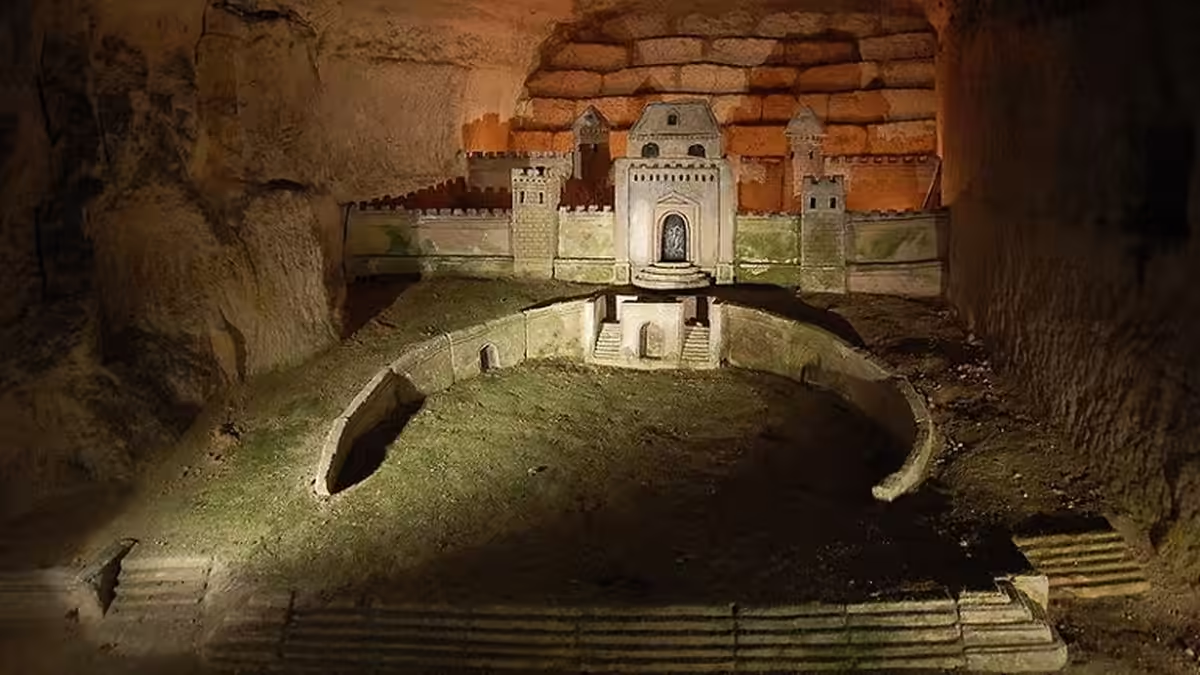
The Paris Catacombs hold artworks beyond the bone walls, most notably the Port-Mahon sculptures — a detailed carved model of a fortress in Menorca, made by a former quarryman named Décure before the ossuary existed. Elsewhere in the galleries, the Fontaine de la Samaritaine marks an old quarry well, and carved doorways, plaques and inscriptions appear throughout the route. Together they show a working quarry that quarrymen and engineers alike treated as more than just a source of stone.
Walk far enough into the Paris Catacombs and the bones aren’t the only thing carved into the walls. Scattered through the galleries, mostly before you reach the ossuary itself, are sculptures and features made by the people who worked this stone long before it became a resting place for the dead. They’re easy to miss if you’re focused only on what’s ahead, but they add real depth to the visit.
This guide covers the main artworks you’ll pass — the Port-Mahon sculptures, the Fontaine de la Samaritaine, and the smaller carved details along the way — and what they tell us about the quarry’s working life. For the ossuary itself, see our guide to the bones, arrangements and meaning you’ll find further along the route.
What Are the Port-Mahon Sculptures?
The Port-Mahon sculptures are a set of detailed carvings made in the quarry galleries by Décure, a former quarryman who had served as a soldier under Louis XV and been held prisoner near Port-Mahon, a fortress on the Spanish island of Menorca. Carved by hand in the years before the ossuary was created, they depict the fortress and surrounding buildings from memory, worked into the stone during his own time using simple tools and torchlight.
Décure is thought to have carved the sculptures over several years in the late 1770s and early 1780s, working from memory of a place he’d been held captive rather than from any plan or drawing. It’s a striking thing to find underground: not an official commission, but one worker’s personal record of his own history, cut into the same limestone that built the city above. According to some accounts, Décure was fatally injured in a collapse while working on a stairway connecting to his carvings, which adds a sombre note to a corner of the Catacombs otherwise associated with quiet craftsmanship rather than the ossuary’s memorial tone. Our guide to the history of the Paris Catacombs sets this in the wider timeline of the quarries before they became a bone store.
The Fontaine de la Samaritaine
Further along the route is the Fontaine de la Samaritaine, a well or small fountain that quarrymen once relied on for water while working underground. It marks the point where the tunnels meet the natural water table, and its still, clear pool is one of the few features in the Catacombs that has nothing to do with the ossuary at all — a reminder that this was, first and foremost, a working environment for the people who cut the stone. It sits among the wider network of tunnels covered in our guide to the underground quarries of Paris.
Carved Doorways, Plaques and Inscriptions
Beyond the two named features, the galleries carry smaller carved details throughout: door frames cut directly into the stone, plaques marking dates and quarry inspection work, and inscriptions that range from practical quarry markings to the more reflective lines found deeper in, closer to the ossuary. Many of these were added or formalised under Héricart de Thury’s stewardship from 1809, as part of turning the site into somewhere fit for visitors rather than simply a functioning quarry. Together they form a quieter layer of the visit, easy to walk past if you don’t know to look for them.
Geology and the Stone Itself
None of these features would exist without the stone underneath them. The Catacombs are cut from Lutetian limestone, the same rock quarried across the Left Bank for centuries to build Paris above, and the carvings are only possible because that limestone is soft enough to work with hand tools yet stable enough to hold its shape for hundreds of years afterwards. Walking the tunnels, you can see the tool marks left by generations of quarrymen alongside the more deliberate artistry of pieces like the Port-Mahon sculptures — a working material turned, in places, into something closer to sculpture.
Seeing the Artworks on Your Visit
The sculptures and carved features sit along the fixed visitor route, so you’ll pass them in sequence rather than needing to seek them out, though it helps to know roughly what you’re looking at and where. An audio guide or a guided tour will point them out as you go; without one, it’s easy to walk past the Port-Mahon sculptures assuming they’re just another quarry wall. Our guide to the map and visitor route shows where these features fall relative to the ossuary and the entrance.
Frequently Asked Questions
What are the Port-Mahon sculptures in the Paris Catacombs?
They’re detailed carvings of the fortress of Port-Mahon in Menorca, made by Décure, a former quarryman and veteran of Louis XV’s armies who had been held prisoner there. He carved them from memory in the years before the ossuary existed, working with simple tools during his own time rather than as an official commission.
Who carved the Port-Mahon sculptures?
A quarryman known as Décure, who had served as a soldier under Louis XV and spent time as a prisoner near the fortress of Port-Mahon on Menorca. He carved the sculptures from memory over several years in the late 18th century, using the same limestone he worked with professionally, and some accounts suggest he was fatally injured in a collapse while extending the site.
What is the Fontaine de la Samaritaine?
It’s a well or small fountain within the quarry galleries, marking a point where the tunnels reach the natural water table. Quarrymen once used it as a water source while working underground, and it remains one of the few features in the Catacombs unrelated to the ossuary, reflecting the site’s earlier life purely as a working quarry.
Are the sculptures older than the ossuary?
Yes. The Port-Mahon sculptures were carved in the years before the ossuary existed, while the galleries were still an active quarry rather than a bone store. The ossuary itself only began taking shape from 1786, with its arrangement into walls following from 1809 — decades after Décure’s carvings were made.
Do the sculptures appear before or after the ossuary on the route?
The Port-Mahon sculptures and the Fontaine de la Samaritaine appear in the quarry sections of the route, generally before you reach the main ossuary further along. Our map and visitor route guide sets out the full sequence from entrance to exit.
Can I photograph the sculptures and carvings?
Yes, photography is generally allowed throughout the Catacombs, including the sculptures, but flash and tripods are not permitted, both to protect the fragile carvings and out of consideration for other visitors in the enclosed tunnels.
Why did quarrymen carve artworks in a working quarry?
Décure’s carvings appear to have been a personal project rather than an official one, made during his own time using materials and skills he already had from his trade. It’s a rare surviving example of a worker leaving a personal mark on the stone he cut for a living, long before the same tunnels took on a very different purpose as an ossuary.
Is there more artwork elsewhere in the wider quarry network?
Yes, though most of it lies outside the official Catacombs route, in the much larger network of tunnels beneath the Left Bank. Modern cataphiles — the urban explorers who access that wider network illegally — have added further art and markings over the decades, though entering those areas outside the official route is against the law. Our guide to the underground quarries explains how the official ossuary relates to that larger, unofficial network.
