

Is the Paris Catacombs worth visiting? Honest review
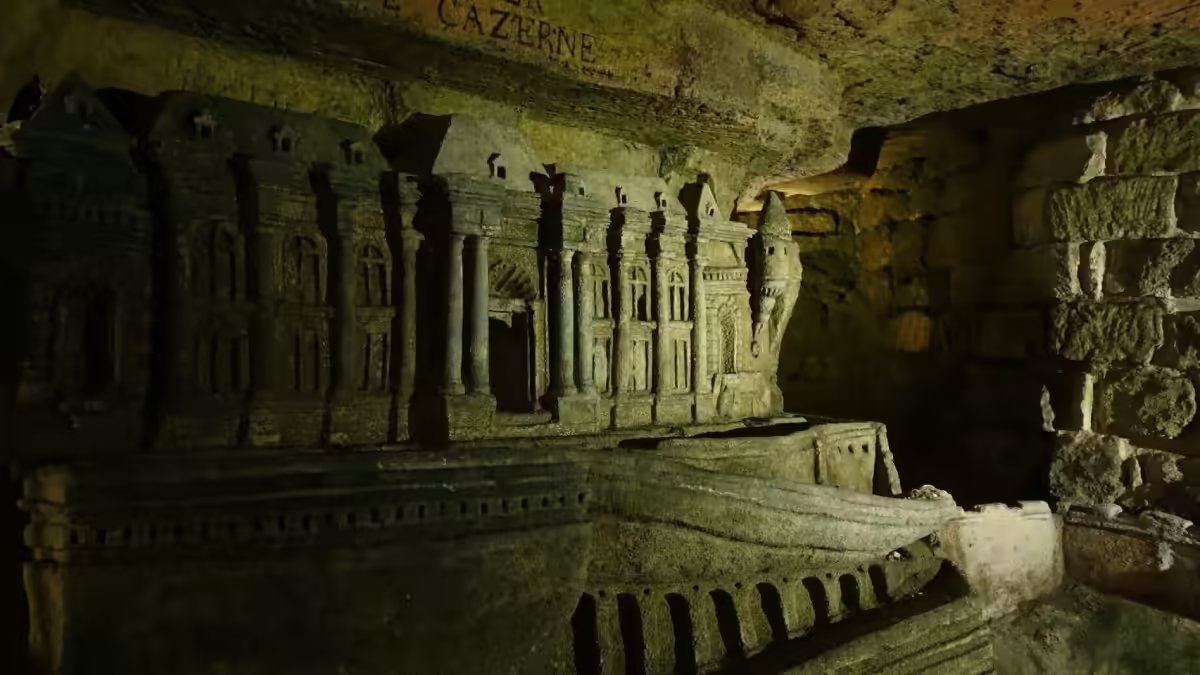
Yes, for most visitors — the Paris Catacombs offer a genuinely moving, historically rich experience unlike anything else in the city, especially since the 2026 renovation improved the lighting, audio guide and displays. The trade-offs are real, though: 131 steps down and 112 up with no lift, a 14°C chill, and a booking process that takes some planning. It’s not for everyone, but it earns its reputation.
Few Paris attractions divide opinion quite like the Catacombs. Some visitors call it the most memorable thing they did in the city; others find an hour among stacked bones underwhelming, or simply too much hassle to book. Both reactions are reasonable, and which one you’ll have depends on things this review sets out plainly.
This is an honest assessment — what makes the Catacombs genuinely worth the effort, the caveats worth knowing before you book, and who’s likely to love it versus who might be better off skipping it.
What Makes It Special
The Catacombs are worth visiting because there’s genuinely nowhere else like them: an ossuary holding the remains of around six million Parisians, arranged into walls of skulls and femurs beneath the city streets. The scale is the point — this isn’t a curated museum display of a few remains, but a confrontation with just how many people the city has quietly rehoused underground since 1786.
Walking through the ossuary has a weight that photographs don’t quite convey. It’s not staged for shock value; the arrangement dates from 1809 and reads more as memorial than spectacle, with carved inscriptions on mortality set among the bones rather than gimmicks. The history behind why the bones ended up here — overflowing cemeteries, public health crises, a city literally running out of room for its dead — adds context that turns the visit from macabre curiosity into something closer to social history.
The 2026 renovation genuinely improved the experience on top of that. New lighting picks out details that used to be lost in gloom, the redesigned audio guide gives the walk a proper narrative rather than a list of facts, and the galleries now include short films and exhibition panels that weren’t there before. For a site this old, that’s a meaningful upgrade rather than a cosmetic one.
The Honest Caveats
The main downsides are practical rather than experiential: tickets are online-only, released just seven days ahead, and sell out fast, so spontaneous visits are essentially impossible. The physical demands are real too — 131 steps down and 112 up with no lift, at a constant 14°C — and some visitors find the quarry galleries before the ossuary repetitive compared with the bone walls themselves.
Booking is the first hurdle. Official tickets go live seven days ahead at 10am Paris time and disappear within hours in peak season, which means either watching the release closely or paying more for a reseller ticket with flexible dates. It’s a genuine source of frustration for travellers used to buying same-day tickets at most attractions.
The physical route is the second consideration. There’s no lift, so 243 steps in total are unavoidable, and the tunnels stay a cold, damp 14°C regardless of the season outside. The walk itself — about 1.5km — spends a good stretch in plain quarry galleries before you reach the ossuary, and some visitors find that section drags a little compared with what they came for. None of this is a flaw exactly, but it’s worth knowing before you commit an hour and a booking slot to it.
Who Will Love It, and Who Won’t
History enthusiasts, anyone drawn to unusual or atmospheric sights, and travellers who appreciate a slower, reflective experience tend to come away genuinely affected. It also rewards people who’ve read a little beforehand — knowing why the bones are here changes how the walls read once you’re standing in front of them.
It’s a harder sell for anyone with mobility, breathing or heart conditions, given the stairs and no lift, or for visitors who are simply uneasy in enclosed spaces — our guide on whether the Catacombs are scary covers this in more depth. Families with very young children, and travellers on a tight schedule who can’t work around the booking window, may also find it more effort than it’s worth for their trip.
The Verdict
The Paris Catacombs are worth visiting for most people who go in with realistic expectations: book well ahead, expect a physically demanding hour, and know that the payoff is a genuinely unusual and historically grounded experience rather than a thrill ride. It isn’t a site to visit on a whim, and it isn’t for everyone, but for the audience it suits, it delivers something no other Paris attraction does. Timing your visit well also helps — see our guide to the best time to visit for the quietest slots.
Frequently Asked Questions
Is the Paris Catacombs worth the money?
Most visitors think so. At €31 for adults with the audio guide included, it’s in line with other major Paris sights, and the experience — an ossuary holding around six million remains — has no real equivalent elsewhere in the city. The main cost that catches people out isn’t the ticket price but the effort of booking a slot before it sells out.
Is it worth visiting if I’ve already seen other ossuaries or crypts?
Yes, generally — the scale here is the differentiator. Most European ossuaries hold a few thousand remains at most; the Paris Catacombs hold around six million, arranged across roughly 1.5km of tunnels. Even visitors who’ve seen similar sites elsewhere usually find the sheer volume here striking rather than repetitive.
How long should I spend there to get the most out of it?
Plan for about an hour underground, which is roughly what the route requires anyway given the walking and stairs. Rushing doesn’t really shorten a worthwhile visit — the ossuary section rewards a slower pace, so leave a little extra time rather than treating it as a box to tick between other sights.
Is it worth visiting with an audio guide, or better with a live guide?
Either works well, and it comes down to preference. The audio guide, now redesigned as part of the 2026 renovation, gives a strong self-paced narrative; a live guide adds the chance to ask questions and go deeper on specific points. Neither is necessary to appreciate the site, but skipping both and going in with no context is where visitors get the least out of it.
Is it worth visiting if I’m short on time in Paris?
It can be, but plan carefully. Between booking a timed slot, travelling to Denfert-Rochereau, and the hour-long visit itself, it’s not a quick add-on to a packed day. If your schedule is tight, decide early whether it’s a priority, since last-minute tickets are rarely available.
Is the Catacombs overhyped?
Not particularly. It’s genuinely one of the more distinctive things to see in Paris, though the booking hassle and physical demands mean the experience of getting there can be more stressful than the visit itself deserves. Visitors who go in expecting a moving, sombre memorial rather than a haunted-house thrill tend to rate it highly.
Is it worth visiting after the 2026 renovation, or was it better before?
The renovation is a genuine improvement — better lighting, a stronger audio guide, new exhibition displays and improved climate control all add to the experience without changing what makes the site special. Long-time visitors returning after the works generally report a smoother, more informative visit rather than a diminished one.
Is it worth visiting for children?
It depends on age and temperament. Older children who understand the history often find it fascinating, but the subject matter, the cold, and the 243 steps make it a poor fit for very young children. See our guide on visiting with kids for an age-by-age view.
