

Visiting the Paris Catacombs with Kids
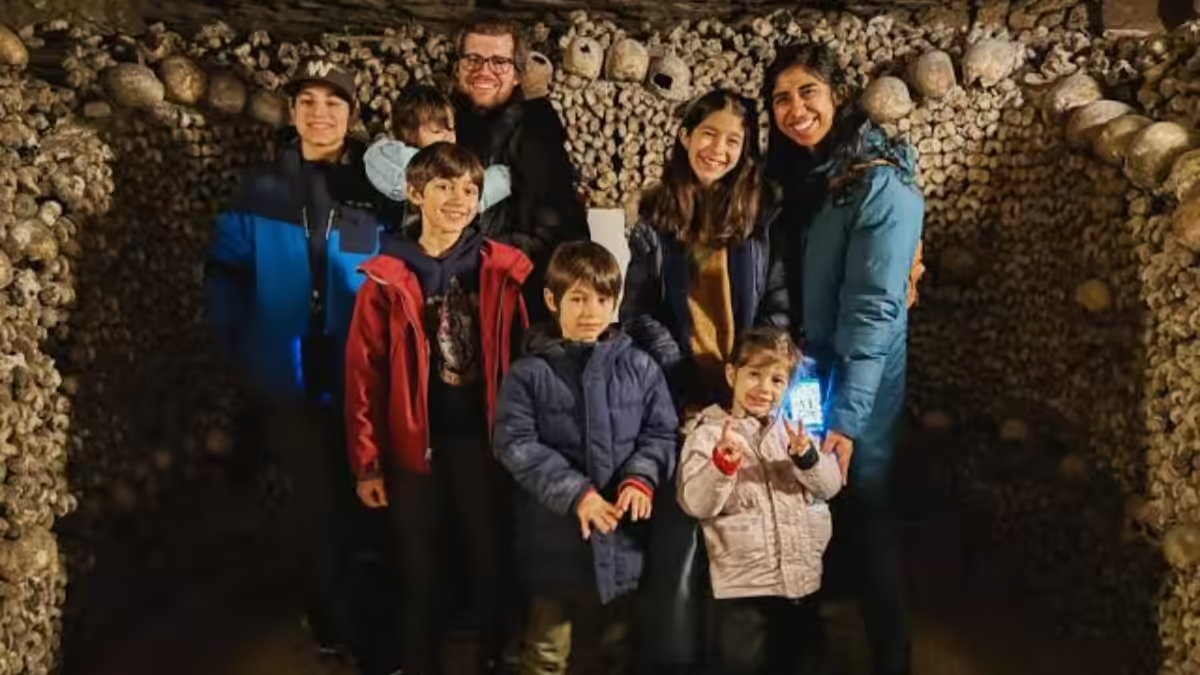
The Paris Catacombs are generally not recommended for children under about 4–5, and even older children should be prepared for a cold, dimly lit walk of 1.5km with 131 steps down and 112 up. Under-5s go free and children aged 5–17 pay around €12. Many older children and teenagers find the history genuinely fascinating, but the site is a real tomb, not a themed attraction, so it suits curious, calm kids better than very young or easily frightened ones.
Deciding whether to bring children to the Paris Catacombs comes down to two questions: are they old enough to handle the physical walk, and are they the right temperament for a site built from six million human skeletons. There’s no single right answer, since children vary hugely in both, but the practical facts help you judge for your own family.
This guide covers age suitability, ticket prices for children, how intense the experience actually is, and how to prepare kids so the visit goes well rather than badly.
What Age Is Suitable?
The Paris Catacombs are not considered suitable for children under roughly 4–5 years old, due to the physical demands and the atmosphere of a real ossuary. Under-5s are admitted free where they are allowed, and children aged 5–17 pay around €12, with an audio guide available for an extra €5. There’s no strict minimum age enforced at the door, so the decision rests with parents judging their own child’s temperament and stamina.
Most families find the cut-off is less about a hard age rule and more about whether a child can manage 1.5km of walking, 243 steps in total, and roughly an hour in a cool, enclosed space without becoming distressed or difficult to manage in a crowd. Toddlers and very young children tend to struggle with both the physical demands and the low light, while children from about six or seven upwards generally cope well if they’re prepared beforehand.
Is It Too Scary for Young Children?
The Paris Catacombs can feel unsettling for young or sensitive children because the ossuary displays real human skulls and bones at close range, in dim lighting, for an extended stretch of the route. It isn’t designed as a scare attraction, but the subject matter is inherently sombre. Children who are easily frightened by dark, enclosed spaces or by the idea of death are likely to find it more distressing than exciting, whatever their age.
There’s a meaningful difference between a child who’s fascinated by history and bones and one who finds the idea of a burial site frightening or upsetting — the same tunnels will land very differently for each. It’s worth talking honestly with your child beforehand about what they’ll see, rather than letting the ossuary come as a surprise. Our full breakdown of whether the Catacombs are scary goes into more detail on what to expect and who tends to find it most unsettling.
The Physical Demands
The visit involves 131 steps down at the start and 112 steps up at the exit, with no lift at any point, plus roughly 1.5km of walking through the tunnels and ossuary itself. The temperature sits at a constant 14°C throughout, so children can get cold quickly if they’re not dressed for it, and there’s nowhere to sit down or turn back partway through. For younger children especially, this is a genuine physical undertaking rather than a quick museum stop, and it’s worth reading our rules and etiquette guide so they know what’s expected once inside.
What Older Children Often Find Fascinating
Children from around age eight or nine upwards, particularly those with any interest in history or science, often find the Catacombs genuinely gripping rather than just unsettling. The sheer scale — six million sets of remains moved here from Paris’s overflowing cemeteries from 1786 — tends to land as astonishing rather than frightening once it’s explained. The carved Port-Mahon sculptures, made by a quarryman working alone in the tunnels, are also a reliable hit with curious kids, and older children studying French history or the French Revolution often connect the visit directly to their schoolwork.
Preparing and Supervising Kids
Explain before you go that the Catacombs are a real cemetery, not a spooky attraction, and that quiet, respectful behaviour is expected throughout — no touching the bones, no running in the narrow passages. Dress them warmly for the 14°C temperature and make sure they can manage the steps independently, since there’s no way to carry a reluctant child back up 112 stairs partway through. Keep them close in the single-file sections, and if they’re anxious, remind them the exit is a fixed distance away rather than an unknown length. For a family visit that goes smoothly, pairing this with practical trip logistics helps — see is the Paris Catacombs worth visiting for a broader view on whether it fits your itinerary.
Frequently Asked Questions
What is the minimum age for the Paris Catacombs?
There’s no strictly enforced minimum age, but the site is generally considered unsuitable for children under about 4–5 due to the physical walk and the atmosphere of a real ossuary. Parents should judge based on their own child’s stamina and temperament rather than age alone, since some five-year-olds cope fine while some older children find it overwhelming.
How much does a child ticket cost?
Children aged 5–17 pay around €12, with an audio guide available for an additional €5. Under-5s are admitted free. There is no separate family ticket, so each child within the paying age bracket needs their own ticket booked in advance, as with adult tickets.
Is the Catacombs too scary for kids?
It can be, particularly for young or sensitive children, since the ossuary displays real skulls and bones at close range in dim, cool tunnels. It isn’t built as a horror experience, but the subject matter is genuinely sombre. See our guide on is the Paris Catacombs scary for a fuller picture before deciding.
Can a pushchair or pram go through the Catacombs?
No. The route includes 131 steps down and 112 up with no lift, and the passages are narrow and uneven, so pushchairs cannot be taken through. This also means the site isn’t wheelchair accessible; our accessibility guide covers alternatives for anyone who can’t manage the stairs.
How long is the visit for a child to manage?
Plan for about an hour underground, covering 1.5km and 243 steps combined. Most children over six or seven manage this comfortably if they’re dressed warmly and prepared beforehand, but it is a sustained walk with no seating and no shortcut back to the entrance partway through.
Will my child find it interesting or just upsetting?
It depends heavily on temperament. Children curious about history, science or the French Revolution often find the scale and the carved sculptures fascinating rather than frightening. Children who are easily unsettled by dark spaces or the idea of death tend to find it more distressing, so it’s worth having an honest conversation with them beforehand.
Should I bring a baby to the Catacombs?
It’s best avoided. The cold 14°C temperature, the lack of a lift, and the 243 combined steps make it impractical and unsuitable for infants and very young toddlers. There are also no baby-changing facilities on the underground route, so families with babies are generally better placing this visit later in a child’s development.
Is there anything for kids to do instead if they’re too young?
Yes. The history and Dark Paris exterior tour explores the area above ground and tells the Catacombs’ story without descending underground, which suits families with children too young for the stairs or the atmosphere. It’s a useful fallback if part of the group wants to go underground and part doesn’t.
